EPSOR: THE FIRST DEAL IS ALWAYS SPECIAL
Published November 25th, 2026
Alison Imbert
Partner, Seed


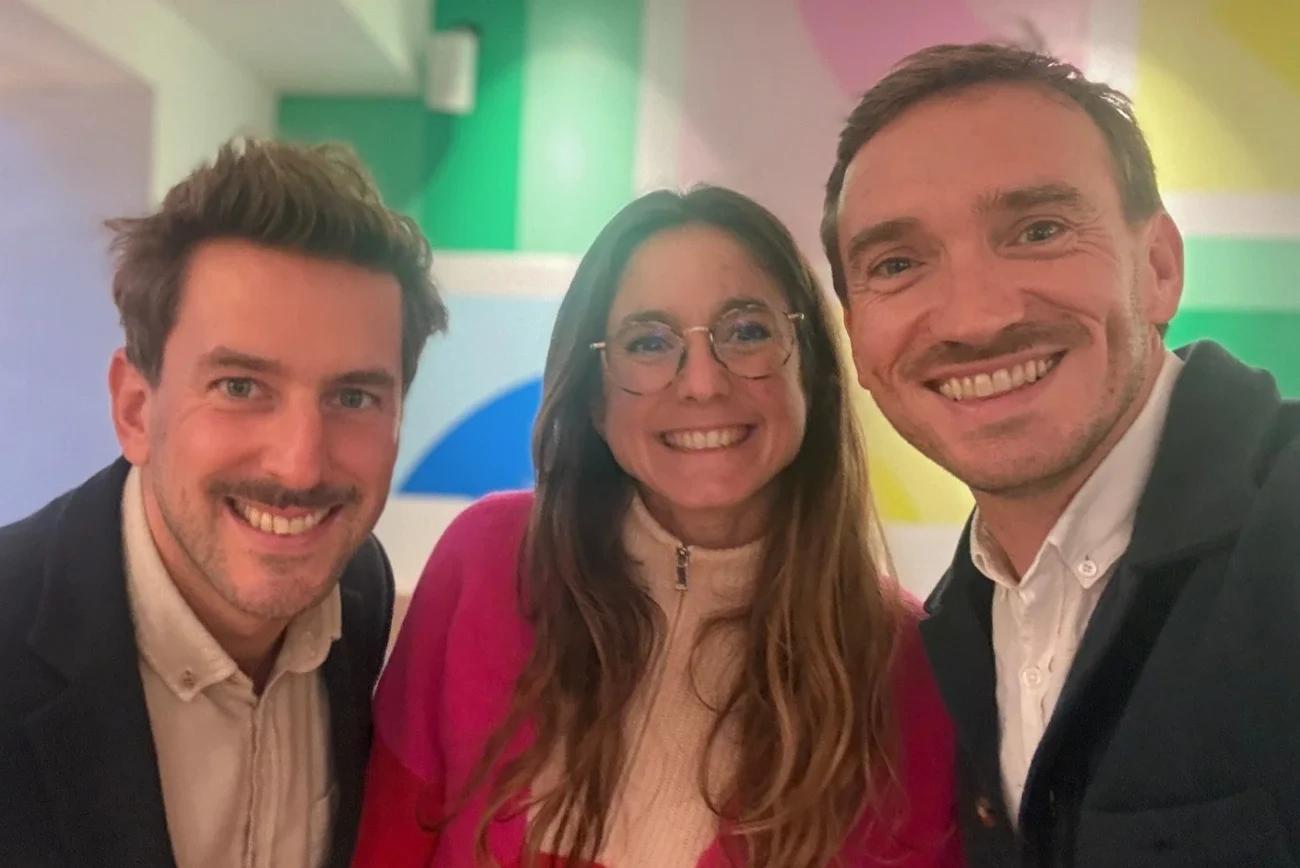
Benjamin Pedrini and Julien Niquet, Epsor Co-Founders and Alison Imbert, Partech
Some investments stay with you more than others. Your first one always will.
In 2018, I made my first investment as a VC, backing Julien Niquet and Benjamin Pedrini, the founders of Epsor. Harmonie Mutuelle is entering into exclusive negotiations for the acquisition of Epsor, marking one of the largest exits in the wealthtech industry.
A major milestone for Partech, and a very personal one for me. It feels like the right moment to look back at how it all started, how far Epsor has come, and what these eight years have meant to me.
HOW WE MET
It was September 2018, in a small meeting room on the ground floor of Partech's Haussmannian offices in Paris. I had joined the firm just three months earlier. Back then, every founder meeting still happened in person, and Julien and Benjamin were on the classic fundraising roadshow, pitching VCs one after another for their €1m seed round.
They didn't look like typical tech founders. Both came from the Inspection Générale of Société Générale, an elite career path within a large bank, but not exactly a breeding ground for entrepreneurs. I was still developing my ability to assess founders, but what struck me when I met them was their energy, their passion for the mission and, above all, their entrepreneurial mindset. They had left comfortable jobs to build Epsor and spent 12 months developing the product and signing their first customers, just the two of them and their CTO, Julien Murgey, without raising a single euro. More than those early achievements, their determination stood out. That's exactly what we look for at Partech at seed stage, when almost everything else is still uncertain.

Benjamin Pedrini and Julien Niquet, Epsor Co-Founders celebrating 1 year
AN OBVIOUS OPPORTUNITY IN A TOUGH MARKET
Julien and Benjamin decided to take on the employee savings market, a huge market but an extremely difficult one to enter. On paper, nothing about it looked easy. Companies with employee savings schemes are typically mid-sized and large corporations, hardly the easiest customers for a startup to win in 2018 with limited funding. Churn is close to zero: there are only a handful of providers, and once a company has chosen one, it rarely switches. That's precisely what makes the market so difficult for a new player to crack. The two incumbents, Amundi and Natixis, almost never lose a client. Winning means taking customers away from giants, one at a time, through sales cycles that can easily last six months or more.
"Winning means taking customers away from giants, one at a time."
Alison Imbert, Partech
So how do you make customers this loyal churn? Epsor set out to offer a better alternative: an open architecture giving companies access to high-quality financial products, combined with a sleek digital experience for both employers and employees. This differentiated offering gave Epsor a real opportunity to take market share from the incumbents. And once you win a client, it's a beautiful business. Churn is virtually nonexistent, and assets under management grow organically as companies contribute to their employees' savings plans every year. There's another layer to the opportunity: Epsor sells to companies but reaches all their employees. By offering them an attractive wealth management platform, it can also capture personal savings at scale, unlike traditional consumer wealth platforms that have to acquire each customer individually.
The opportunity was incredible. Our thesis was built around Julien and Benjamin's ability to seize it: to build a complex, differentiated financial product and earn the trust of HR leaders at large enterprises, convincing them to switch to Epsor.

Julien Niquet and Benjamin Pedrini, Co-Founders at Epsor
MY FIRST DEAL
For me and the other partners at Partech, it was an obvious opportunity. For the VC industry, it was far from obvious: we were the only fund willing to put a term sheet on the table.
"We were the only fund willing to put a term sheet on the table." Alison Imbert, Partech
The final negotiation took place on the large leather sofas in one of our partners' offices. Julien and Benjamin held firm on their valuation, and I had my own price point in mind. At some point, Philippe Collombel, our General Partner and fintech enthusiast, walked in, asked each side for their number, said, "We need to work together. Let's split the difference and move on," and immediately left the room. We shook hands moments later. That was my first deal closed at Partech.
The pattern repeated at every subsequent round. Each time, Epsor had just one term sheet on the table. BlackFin preempted the Series A in June 2019, seven months after our seed investment, when traction was still relatively early. Revaia did the same for the Series B in 2021. Finally, Isalt became the sole investor in Epsor's Series C in November 2024. Epsor never had a crowded fundraising process. At every stage, one investor chose to believe in Julien and Benjamin, and in what they were building.
And I must say, I've always been impressed by their ability to build momentum and negotiate firmly, even when they had little leverage left.
THE LONG ROAD TO LEGITIMACY, THROUGH HIGHS AND LOWS
In financial services, legitimacy takes years to build, and no amount of money can make that happen overnight. You win customers one by one, against much larger, deeply entrenched players.
The first years put this to the test. Growth was starting to accelerate in 2020 when Covid hit. Changing an employee savings provider was nobody's priority in HR, and creating a sense of urgency became almost impossible. It was a frustrating period: Epsor had everything it needed to accelerate, but customers had other priorities.
What Julien and Benjamin did during that time proved decisive. They managed cash carefully while continuing to build a substantial commercial pipeline. Some of the contracts signed in 2025 and 2026 had actually been initiated during those difficult quarters.
"In financial services, legitimacy takes years to build, and no amount of money can make that happen overnight" Alison Imbert, Partech
In January 2021, Bpifrance put its trust in Epsor and decided to move its entire employee savings scheme to the platform. It was a landmark win. And things started moving in the right direction: that same year, Revaia preempted the Series B. We doubled down. Epsor became one of the largest positions in our fund, alongside Pennylane. It was a clear demonstration of our conviction in both the founders and the market.
Then came 2022 and 2023, which were tough. Following the Series B, Epsor had invested heavily in sales, but sales cycles remained very long and the commercial model wasn't delivering the expected results. The company had to pause hiring and reorganize the team to do more with less.
For any founder who has been through this, it's an incredibly difficult moment. First, you have to align with your investors on a new plan (and investors are, as everyone knows, often more cautious than founders). Then comes the execution. Doing it the right way, while keeping the team motivated and on board, takes real leadership. I think Julien and Benjamin handled it exceptionally well.
The signs of an inflection point were there, but the turnaround was not yet confirmed. The Series C fundraising process proved tough, until Isalt finally put forward a term sheet in November 2024. Almost simultaneously, things started to click. Epsor signed major customers such as EY, Céline and AFD (Agence Française de Développement). This triggered a snowball effect, finally enabling the company to win clients with tens of thousands of employees.
Then came 2025, with the signing of Louis Vuitton: by far the largest deal in the industry that year, and a landmark reference for Epsor. When Louis Vuitton chooses a provider, the other LVMH maisons and the wider luxury industry take notice. A few months later, Epsor crossed the €3bn assets-under-management milestone. It had finally earned its place among the industry's leading players.
"What carried them through was their determination, their composure in making the right decisions at the right time, and their rare ability to convince everyone around them..." Alison Imbert, Partech
Over those eight years, Julien and Benjamin experienced extraordinary highs and lows. What carried them through was their determination, their composure in making the right decisions at the right time, and their rare ability to convince everyone around them - customers, employees and investors - that they were heading in the right direction.
ONE OF THE BIGGEST EXITS FOR THE WEALTHTECH INDUSTRY
Epsor has built a unique position in the market. It is now the largest independent player with €3.5bn in assets under management and more than 300,000 employee savers, combining a broad range of high-quality financial products with a top-notch experience for employers and employees. The market has been so difficult to penetrate that no significant new independent player has emerged over the past decade. Harmonie Mutuelle understood how rare the asset Julien and Benjamin built is, and how hard it would be to replicate.
"It is now the largest independent player with €3.5bn in assets under management and more than
300,000 employee savers" Alison Imbert, Partech
Discussions with Harmonie Mutuelle started more than a year ago. That's often the secret behind the best strategic exits: giving the acquirer time to get to know the founders, understand their vision and build not just business synergies, but a genuine human connection.
Beyond the business synergies, both companies share the same broader mission: looking after employees throughout their professional lives, from health insurance and protection to savings and retirement. Together, they can offer companies a comprehensive package covering all these needs.
The cultural fit is just as strong. Harmonie Mutuelle is a mutualist organisation driven by a clear social mission, while Epsor was built around its own sense of purpose, with responsible investing and an uncompromising focus on service quality at its core. This is more than a strategic fit: it's a meeting of two organisations that share a similar sense of purpose.
A NEW CHAPTER FOR EPSOR, A MILESTONE FOR ME
Epsor was my very first investment, and in many ways, I grew as a VC alongside Julien and Benjamin.
Working with them taught me what it takes to build a company: making tough calls, staying true to your convictions while knowing when to adapt. Their passion and determination were contagious and pushed me to raise my own bar.
Along the way, I developed a real passion for the complexity and depth of the employee savings industry, a complex market where deep expertise matters. I learned how demanding enterprise sales can be, and the patience, persistence and energy it takes to win major deals.
But above all, Epsor shaped the investor I became. I learned what it really means to support founders: being in their corner through the highs and lows, knowing when to challenge and when to listen, and bringing more to the table than the classic “grow faster, but please cut costs too.”
"Epsor shaped the investor I became.
I learned what it really means to support founders." Alison Imbert, Partech
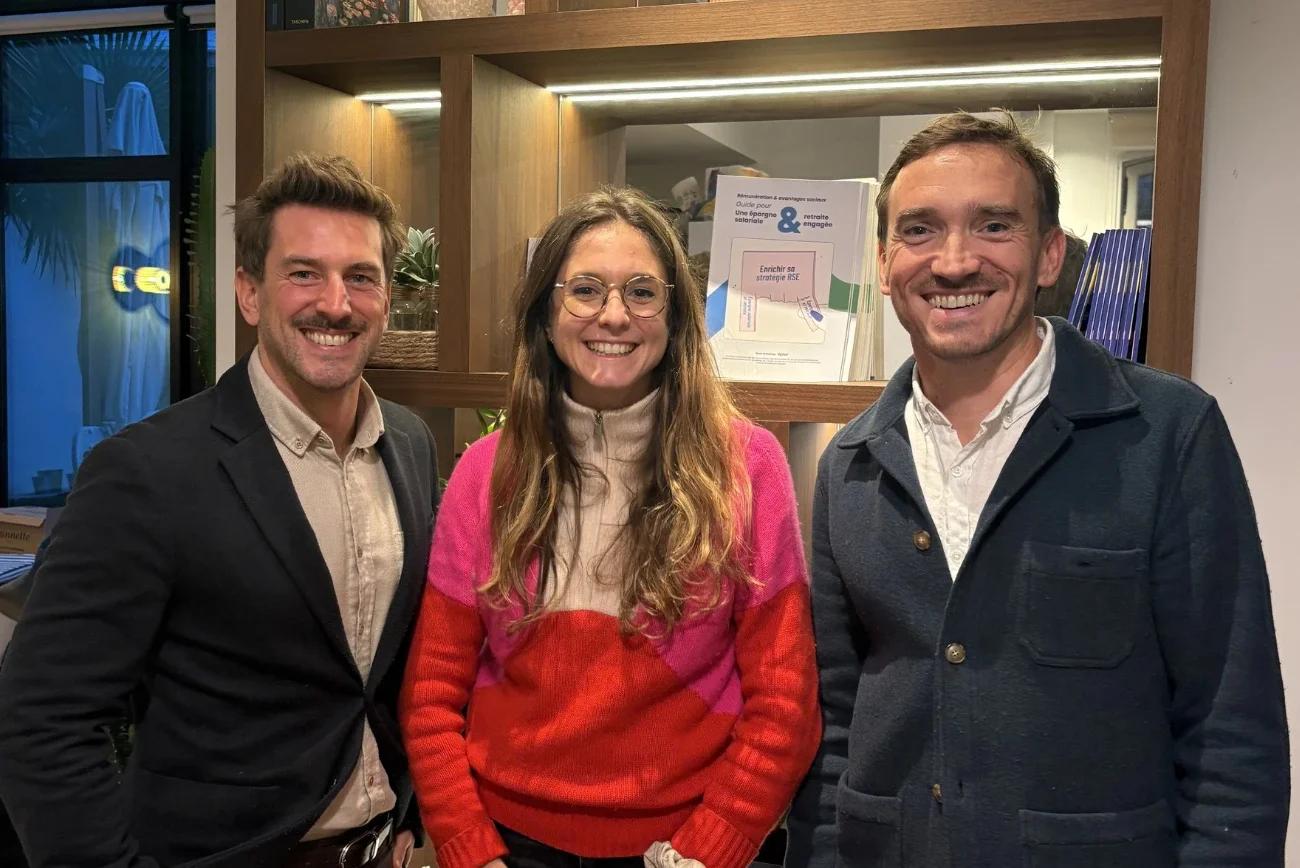
Benjamin Pedrini, Alison Imbert and Julien Niquet
Today marks a major milestone for Epsor, a landmark exit for our seed fund, and a very special moment for me personally.
Julien and Benjamin, thank you for trusting the young VC I was back in 2018, for everything you've taught me, and for letting me be part of this incredible journey!
Thank you!
SUBSCRIBE TO OUR NEWSLETTER


